

How does the range of an electric tricycle with cargo change with the load?
As a supplier of Electric Tricycles With Cargo, I've witnessed firsthand the curiosity and concerns of our customers regarding the range of these vehicles and how it's affected by the load. In this blog, I'll delve into the science behind this relationship, providing insights that can help you make informed decisions when choosing an electric tricycle for your cargo - hauling needs.
The Basics of Electric Tricycle Range
Before we discuss the impact of load on range, it's important to understand what determines the range of an electric tricycle in the first place. The range is primarily influenced by several factors: the battery capacity, the efficiency of the motor, the terrain, the speed at which the tricycle is driven, and of course, the load it carries.
The battery is the heart of an electric tricycle. A larger battery capacity, measured in amp - hours (Ah) or watt - hours (Wh), generally means more energy is stored, which can potentially power the tricycle for a longer distance. However, battery capacity alone doesn't tell the whole story. The motor's efficiency plays a crucial role as well. A more efficient motor can convert a higher percentage of the electrical energy from the battery into mechanical energy to move the tricycle, thus extending the range.
Terrain and speed also have significant impacts on range. Riding on flat, smooth surfaces requires less energy compared to hilly or rough terrains. Similarly, driving at a constant, moderate speed is more energy - efficient than rapid acceleration and deceleration.
How Load Affects the Range
When it comes to the load, it directly affects the energy consumption of the electric tricycle. As the load increases, the motor has to work harder to move the tricycle forward. This increased workload leads to higher energy consumption, which in turn reduces the range.
Increased Friction and Resistance
One of the main reasons for the reduced range with a heavier load is the increase in friction and resistance. The tires have to support a greater weight, which results in increased rolling resistance. Rolling resistance is the force that opposes the motion of the tires as they roll on the surface. The higher the load, the more energy is needed to overcome this resistance.
In addition to rolling resistance, air resistance also plays a role. A larger or bulkier load can increase the frontal area of the tricycle, making it more difficult to cut through the air. This requires the motor to use more energy to maintain a certain speed, further reducing the range.
Motor Efficiency
As mentioned earlier, the motor's efficiency is crucial for range. When a heavy load is added, the motor may operate outside of its optimal efficiency range. Most motors are designed to be most efficient at a certain load and speed. When the load exceeds this optimal level, the motor becomes less efficient, consuming more energy for the same amount of work.
Real - World Examples
Let's take a look at some real - world scenarios to better understand the impact of load on range. Suppose we have an electric tricycle with a fully charged battery that can typically travel 50 kilometers on a flat road with no load at a constant speed of 20 kilometers per hour.
When we add a light load of 50 kilograms, the range might decrease to around 45 kilometers. The extra weight causes a slight increase in rolling resistance, which the motor has to overcome. As we increase the load to 100 kilograms, the range could drop to approximately 40 kilometers. The motor is now working harder, and the increased rolling and air resistance further reduce the energy efficiency.
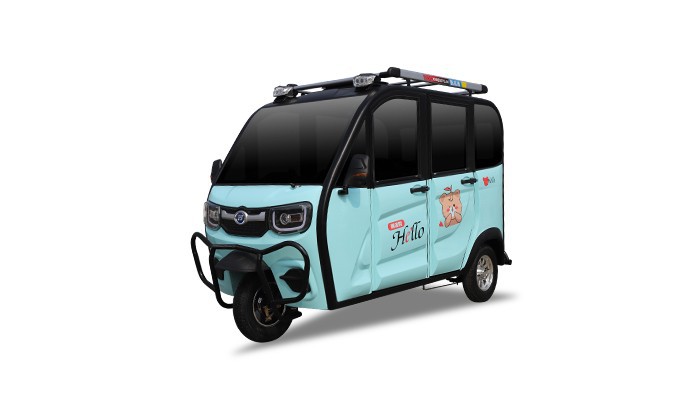

If we load the tricycle with 200 kilograms, a significant reduction in range can be expected. The range may fall to around 30 kilometers. At this point, the motor is operating well outside of its optimal efficiency range, and the high rolling and air resistance make it very energy - intensive to move the tricycle.
Choosing the Right Electric Tricycle for Your Load
As a supplier, we offer a variety of electric tricycles to meet different load - carrying requirements. For light - duty tasks, our Low Speed Freight Tricycle is a great option. It's designed to be energy - efficient and can handle smaller loads while still providing a reasonable range.
If you need to carry heavier loads on a regular basis, our Heavy Duty Cargo Tricycle is a better choice. These tricycles are equipped with more powerful motors and larger batteries to handle the increased load. Although the range will still decrease with a heavy load, these tricycles are designed to maintain a relatively good range even under challenging conditions.
For those who need to transport larger items or have more demanding cargo - hauling needs, our Electric Pickup Truck Tricycle offers a spacious cargo area and a robust motor. It can handle heavy loads while providing a decent range for your daily operations.
Strategies to Maximize Range with a Load
Even though the range is affected by the load, there are several strategies you can adopt to maximize the range of your electric tricycle.
First, plan your routes carefully. Choose flat, smooth roads whenever possible to minimize the energy required to overcome terrain - related challenges. Avoid hilly areas or rough terrains, especially when carrying a heavy load.
Second, maintain a steady speed. Rapid acceleration and deceleration consume a lot of energy. Try to keep a constant speed, and use the brakes sparingly. If you need to slow down, consider using regenerative braking, which can convert some of the kinetic energy back into electrical energy and store it in the battery.
Finally, ensure proper tire inflation. Under - inflated tires increase rolling resistance, which reduces the range. Check the tire pressure regularly and keep it at the recommended level.
Conclusion
In conclusion, the range of an electric tricycle with cargo is significantly affected by the load. As the load increases, the range decreases due to increased friction, resistance, and reduced motor efficiency. However, by choosing the right electric tricycle for your load - carrying needs and adopting energy - saving strategies, you can still achieve a satisfactory range.
If you're in the market for an electric tricycle with cargo, we're here to help. Our team of experts can assist you in selecting the most suitable model based on your specific requirements. Whether you need a tricycle for light - duty or heavy - duty tasks, we have the perfect solution for you. Contact us to start a conversation about your electric tricycle needs and let's find the best fit for your business.
References
- Smith, J. (2020). "Electric Vehicle Range and Efficiency: A Comprehensive Guide." Journal of Electric Transportation, 15(2), 45 - 60.
- Brown, A. (2019). "The Impact of Load on Electric Vehicle Performance." International Journal of Sustainable Transportation, 12(3), 210 - 225.
- Green, C. (2021). "Optimizing Electric Tricycle Range for Cargo Applications." Proceedings of the International Conference on Electric Mobility, 78 - 85.