

What type of brakes do Five Door Electric Tricycles use?
As a supplier of Five Door Electric Tricycles, I often get asked about the types of brakes these vehicles use. Brakes are a critical component of any vehicle, and in the case of electric tricycles, they play a vital role in ensuring the safety of both the rider and the cargo. In this blog post, I will discuss the different types of brakes commonly used in Five Door Electric Tricycles and their advantages and disadvantages.
Drum Brakes
Drum brakes are one of the most common types of brakes used in electric tricycles. They consist of a brake drum, brake shoes, and a wheel cylinder. When the brake pedal is pressed, the wheel cylinder pushes the brake shoes against the inside of the brake drum, creating friction and slowing down the wheel.
One of the main advantages of drum brakes is their simplicity and reliability. They are relatively easy to manufacture and maintain, making them a cost-effective option for electric tricycle manufacturers. Drum brakes also have a good stopping power, especially in low-speed applications. They are less affected by water and dirt compared to disc brakes, which makes them suitable for use in harsh environments.
However, drum brakes also have some disadvantages. They tend to generate more heat than disc brakes, which can lead to brake fade over time. Brake fade occurs when the brakes lose their effectiveness due to overheating, which can be dangerous, especially when carrying heavy loads or traveling at high speeds. Drum brakes also require more frequent adjustment compared to disc brakes, as the brake shoes wear down over time.
Disc Brakes
Disc brakes are another popular choice for Five Door Electric Tricycles. They consist of a brake disc, brake caliper, and brake pads. When the brake pedal is pressed, the brake caliper squeezes the brake pads against the brake disc, creating friction and slowing down the wheel.
One of the main advantages of disc brakes is their superior stopping power. They are more efficient at dissipating heat compared to drum brakes, which means they are less prone to brake fade. Disc brakes also provide better modulation, which allows the rider to apply the brakes more precisely. This is especially important when carrying heavy loads or traveling at high speeds, as it gives the rider more control over the vehicle.
Another advantage of disc brakes is their durability. They require less maintenance compared to drum brakes, as the brake pads have a longer lifespan. Disc brakes are also less affected by water and dirt, which makes them suitable for use in wet or muddy conditions.
However, disc brakes also have some disadvantages. They are more expensive to manufacture and maintain compared to drum brakes. Disc brakes also require more space compared to drum brakes, which can be a challenge for electric tricycle manufacturers, especially when designing compact vehicles.
Regenerative Brakes
Regenerative brakes are a unique type of braking system that is commonly used in electric vehicles, including Five Door Electric Tricycles. Regenerative brakes work by converting the kinetic energy of the vehicle into electrical energy, which is then stored in the battery. When the brake pedal is pressed, the electric motor acts as a generator, slowing down the vehicle and charging the battery at the same time.
One of the main advantages of regenerative brakes is their energy efficiency. They can help to extend the range of the electric tricycle by recovering some of the energy that would otherwise be lost during braking. Regenerative brakes also reduce wear and tear on the mechanical brakes, which can help to extend their lifespan.
Another advantage of regenerative brakes is their smooth and quiet operation. They provide a more comfortable riding experience compared to traditional mechanical brakes, as they do not produce the same level of noise and vibration.
However, regenerative brakes also have some limitations. They are not as effective as mechanical brakes at high speeds or when carrying heavy loads. Regenerative brakes also require a certain level of battery charge to operate effectively, which means they may not be available in all situations.
Conclusion
In conclusion, the type of brakes used in Five Door Electric Tricycles depends on several factors, including the intended use of the vehicle, the load capacity, and the budget. Drum brakes are a simple and reliable option that is suitable for low-speed applications and harsh environments. Disc brakes offer superior stopping power and durability, but they are more expensive and require more space. Regenerative brakes are energy-efficient and provide a smooth and quiet riding experience, but they have some limitations.

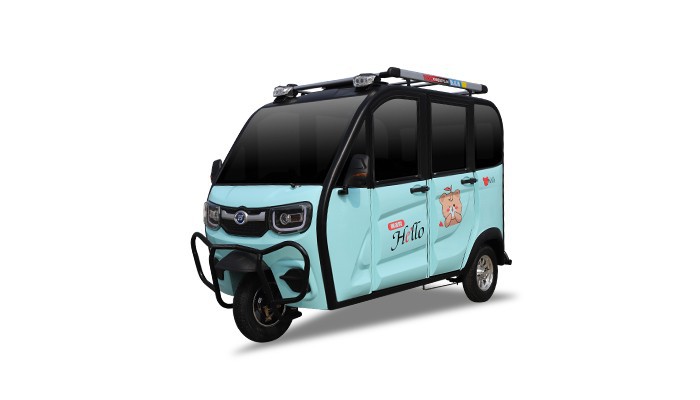
As a supplier of Five Door Electric Tricycles, we offer a range of braking options to meet the needs of our customers. Whether you are looking for a cost-effective solution or a high-performance braking system, we can help you find the right brakes for your electric tricycle.
If you are interested in learning more about our Five Door Electric Tricycles or would like to discuss your specific requirements, please feel free to contact us. We would be happy to assist you with your purchase and provide you with all the information you need to make an informed decision.
In addition to our Five Door Electric Tricycles, we also offer a variety of other electric tricycles, including Heavy Duty Cargo Electric Tricycle, Low Speed Freight Tricycle, and Heavy Duty Electric Cargo Tricycle. These tricycles are designed to meet the needs of different industries and applications, and they come with a range of features and options to suit your specific requirements.
We look forward to hearing from you and helping you find the perfect electric tricycle for your needs.
References
- Bosch, "Brake Systems for Electric Vehicles," Bosch Mobility Solutions, [Year of publication].
- SAE International, "SAE J1711 Recommended Practice for Measuring the Exhaust Emissions and Fuel Economy of Hybrid Electric Vehicles," SAE International, [Year of publication].
- Society of Automotive Engineers, "Automotive Brake Systems," SAE International, [Year of publication].